How they work.
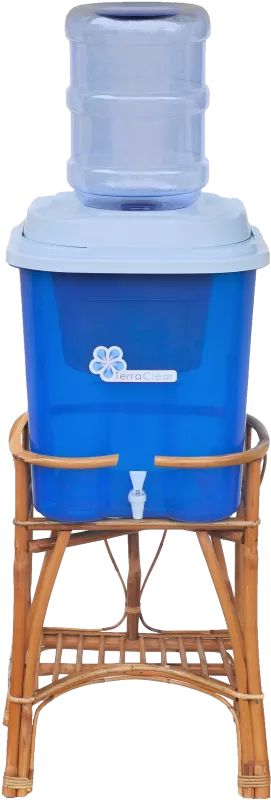
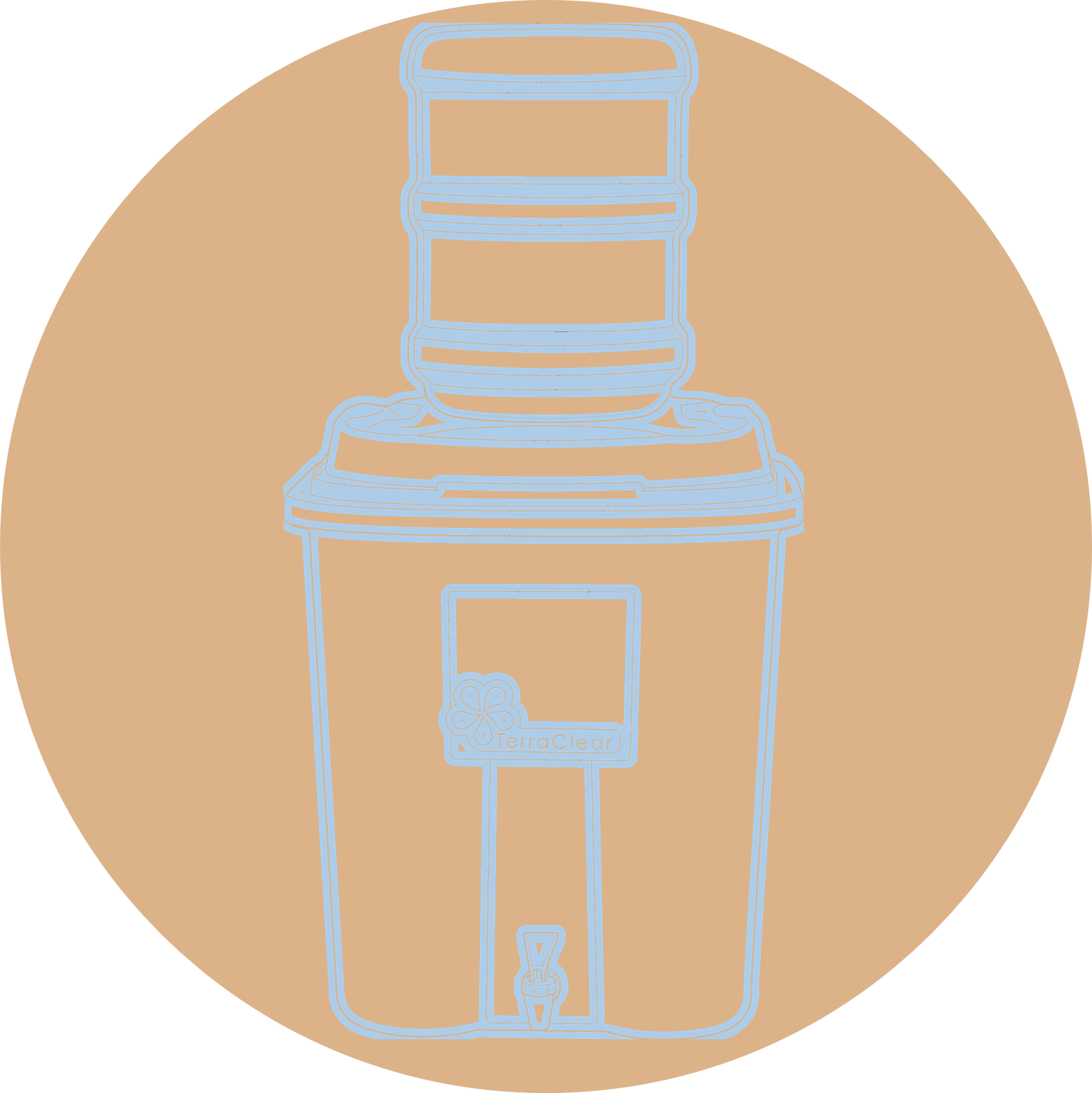
TerraClear Foundation (TCF) uses water filters made by TerraClear Production (TCP). The TCP Ceramic Water Purifier (CWP) is a zero-emissions, point-of-use ceramic water purification system. It consists of a pot-shaped ceramic filter element set in a plastic receptacle tank with a lid and spigot to protect filtered water from recontamination.
Ceramic filtration is the use of porous ceramic (fired clay) to filter microbes or other contaminants from drinking water. Raw water seeps through the ceramic filter element by gravity at a post-production rate of 1.7 to 3.5 liters per hour, producing potable water.
A single TerraClear CWP can filter up to 55 liters per day and store up to 36 liters of safe water in the receptacle tank. Maintenance consists of scrubbing the ceramic filter element to unclog pores and washing the receptacle tank to prevent bacterial growth. With the filter fed by gravity and the replaceable spigot being the only moving part, the product is a low technology solution to households’ lack of access to safe water.
How they’re made.
The filters themselves are kiln-fired clay impregnated with colloidal silver. TerraClear Production (TCP) manufactures the filter elements at a purpose-built factory near Pakse, Lao PDR. Locally sourced clay and rice husks are ground to a specific size and mixed at precise levels.
This precise ceramic mixture of clay and rice husks is then molded into pots and fired in a kiln. During the firing process, the rice husk burns and creates the extremely small pores which, due to size exclusion, act as physical barriers to micro-organisms, making the filter effective at removing bacteria, protozoa, helminths, turbidity and other suspended solids. After firing, the filters are brushed with colloidal silver, infusing the clay pores to provide a permanent, secondary defense, which when used correctly removes over 99% of bacteria.1,2,3,4
TCP filters are regularly sold with refillable 12-liter bottles which can be used to collect untreated water and positioned on the system to automatically flow into the filter. In addition, stands are also produced and regularly purchased by end users for convenience and hygiene. A pictorial instruction sticker is fixed to the side of each CWP unit, along with contact details to facilitate questions and replacements.